

This page is here to help you prepare for prolonged dry weather, understand what it could mean for you, and know where to find the latest regional information.
Why we are preparing
Climate forecasts indicate El Niño conditions are well developed in the Pacific Ocean. For New Zealand, El Niño is often associated with stronger westerly winds, cooler temperatures west of the main ranges, and more unsettled weather.
But in parts of the Wellington Region, these patterns can also increase the likelihood of heat waves, lower rainfall and prolonged dry conditions, particularly in eastern Wairarapa.
Because the Wellington Region sits in a transition zone and is surrounded by ocean, El Niño impacts here are often less pronounced and less predictable than in other parts of New Zealand and overseas. Every El Niño is different, and actual conditions may vary from the current outlook.
Greater Wellington monitors climate, river flows, groundwater and freshwater health across the region. We also regulate water takes, provide recreational water quality information, and work with mana whenua and partner agencies to prepare for and respond to prolonged dry conditions.
For detailed information on current conditions, rainfall, soil moisture and drought monitoring, visit our drought check page.
Current situation
Regional drought risk remains elevated for spring and summer 2026/27, particularly in eastern Wairarapa. Current water resources remain generally in good condition following a wet autumn, winter and early spring.
As of late October, soil moisture, river flows and groundwater levels are generally within the normal range across most of the region. However, drier conditions are beginning to emerge in parts of northern and eastern Wairarapa following below-average October rainfall.
Greater Wellington is monitoring conditions closely as warmer, drier weather becomes established and preparing for potential impacts if dry conditions persist through summer.
This section will be updated monthly, or if conditions change significantly.
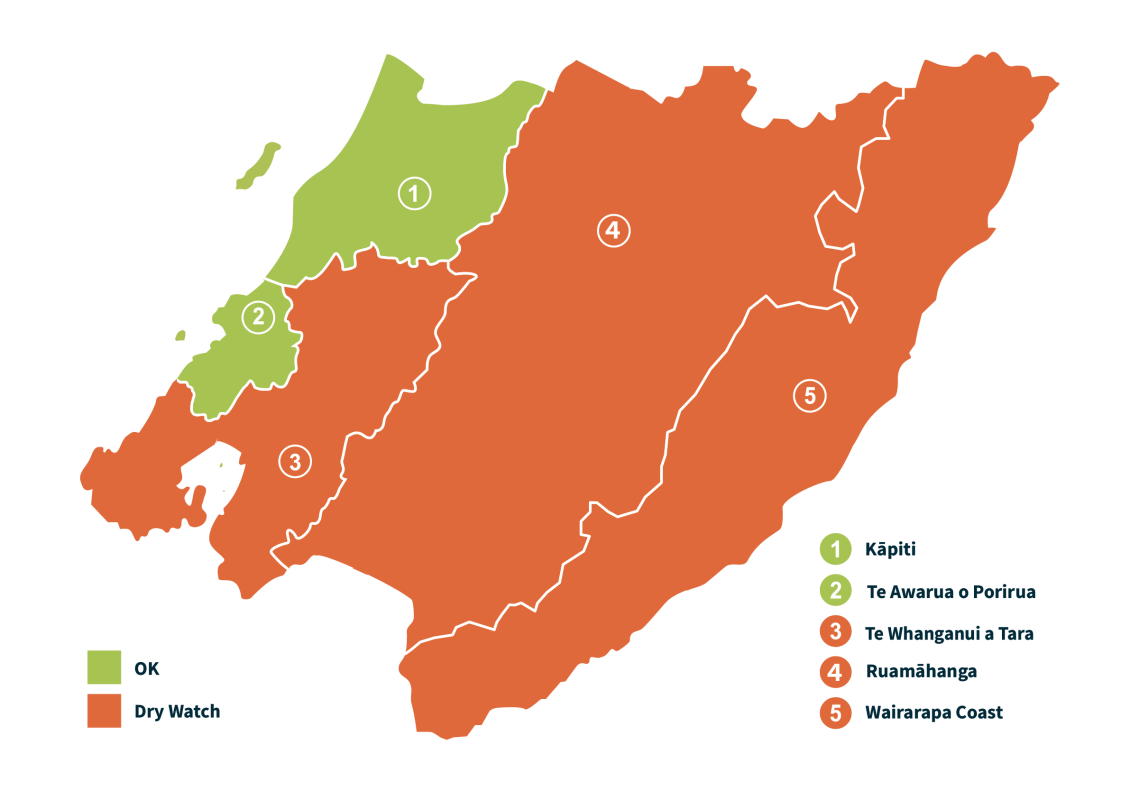
Seasonal outlook
A strong El Niño is expected to influence spring and summer 2026/27. For New Zealand, El Niño is often associated with stronger westerly winds, cooler temperatures west of the main ranges and more unsettled weather. In parts of the Wellington Region, particularly east of the Tararua Range, these patterns can also increase the likelihood of heat waves, lower rainfall and prolonged dry conditions.
The greatest drought concern for the Wellington Region is currently in eastern Wairarapa, particularly the Wairarapa Coast and Ruamāhanga catchment.
Forecast uncertainty remains, particularly around the timing, location and severity of impacts. Current ocean temperatures around New Zealand remain above average and may influence how dry conditions develop compared with previous El Niño events.
Actual conditions may differ from the current outlook. For the latest data-based assessment, including rainfall, soil moisture, river flows and drought monitoring, visit drought check.
| Area | Spring 2026 | Summer 2026/27 | Autumn 2027 |
|---|---|---|---|
| Kāpiti | Green, OK | Green, OK | Green, OK |
| Te Awarua-o-Porirua | Green, OK | Green, OK | Green, OK |
| Te Whanganui-a-Tara | Orange, Dry Watch | Orange, Dry Watch | Green, OK |
| Ruamāhanga | Orange, Dry Watch | Orange, Dry Watch | Green, OK |
| Wairarapa Coast | Orange, Dry Watch | Red, Dry Warning | Orange, Dry Watch |
- Green, OK: Conditions are within normal seasonal ranges.
- Orange, Dry Watch: Dry conditions are forecast. Increased monitoring and preparedness are recommended.
- Red, Dry Warning: Significant water shortages are occurring or highly likely. Drought response arrangements may be activated.
What happens when conditions become dry?
Drought does not just affect rainfall. It can affect rivers, water supplies, farming operations, ecosystems, recreation and community wellbeing. Here is what dry conditions can mean for our region.
What you can do now
- Check your water supply and storage arrangements.
- Use water efficiently and reduce avoidable water use.
- Understand any water consent conditions that apply to you.
- Plan ahead for stock water needs.
- Stay informed about conditions in your area.
- Report environmental incidents if you see them.
Stay informed
Stay up to date with Greater Wellington’s drought advice, river flow information, water quality updates and seasonal outlooks.
- Drought check - more detailed climate information
- River flow information
- Water quality updates
Farmers, growers and lifestyle block owners can also use MPI’s drought and El Niño resources for practical advice on preparing for dry weather, managing feed and stock water, and understanding responsibilities for animals and land.
- Preparing for El Niño
- Dealing with drought conditions | NZ Government
- Preparing for dry weather fact sheet
- Feed in dry times – Get prepared early
- Farm checklist – Preparing for dry weather
- Prepare your lifestyle or small block for hot, dry weather
Check current household water restrictions for your area:
- Wellington City, Porirua City, Hutt City and Upper Hutt City
- South Wairarapa District
- Carterton District
- Masterton District
- Kāpiti Coast District
Health NZ Advice for El Niño
Get in touch
- Phone:
- 0800 496 734
- Email:
- info@gw.govt.nz