Greater Wellington has filed charges against Tiaki Wai and Wellington City Council following its investigation into alleged unlawful wastewater discharges from the Moa Point Wastewater Treatment Plant. The charges relate to…

A million native trees have been planted in Greater Wellington regional parks, a milestone in efforts to reforest former grazing land through the council’s Recloaking Papatūānuku planting programme.
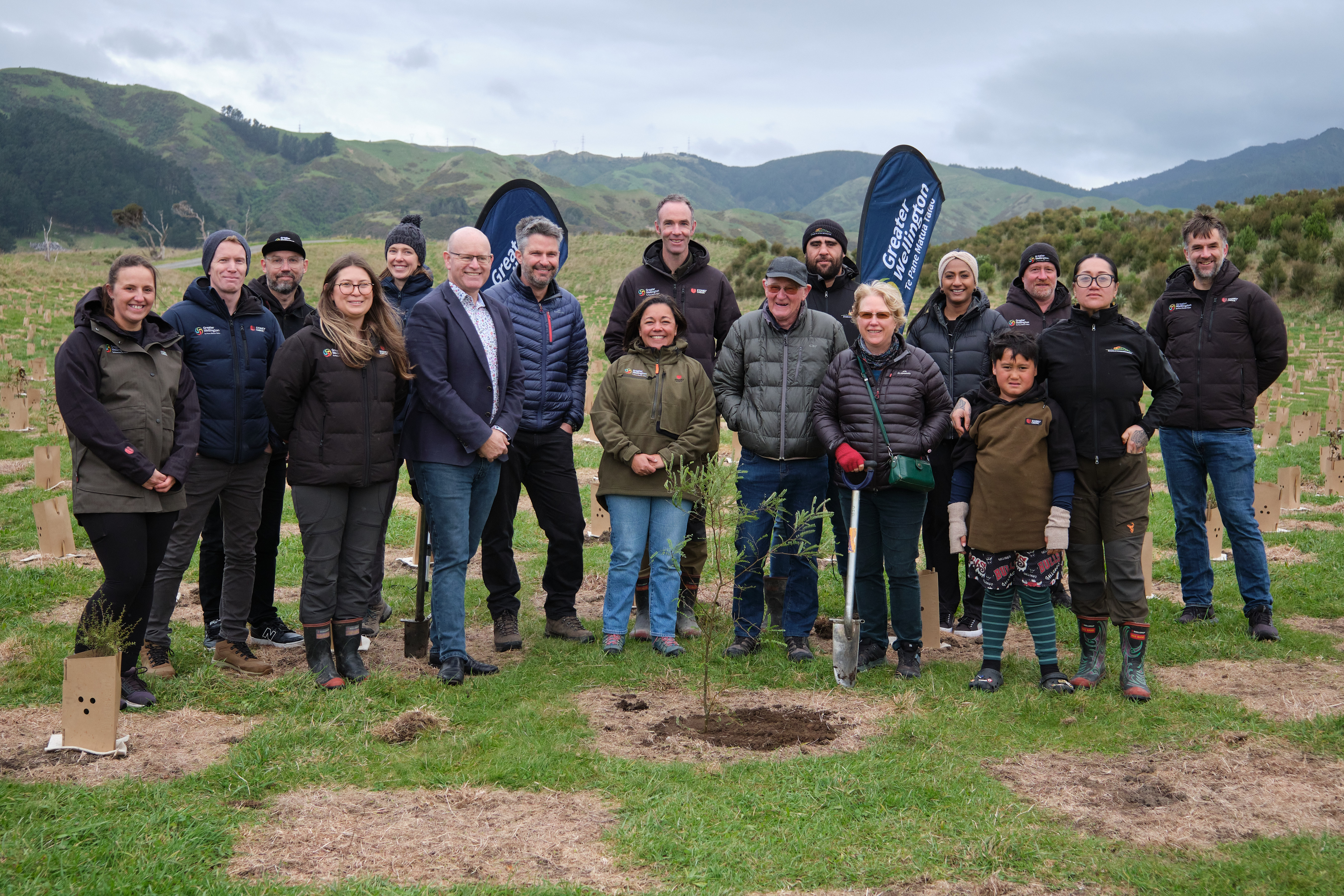
Live on TVNZ Breakfast, the millionth tree was planted today in Queen Elizabeth Park, celebrating the ongoing work of mana whenua, community groups, and volunteers at planting days facilitated by Greater Wellington.
Council Chair Daran Ponter says the programme is about working with the community to restore ecosystems that sustain wildlife and forests that protect the climate.
“A million native trees is a special milestone for our region, and a powerful reminder of what we can achieve when we come together for te taiao,” says Cr Ponter.
“Recloaking Papatūānuku is about much more than planting trees. It’s about restoring the health of our regional parks, improving habitat for native species, enhancing the well-being of our waterways, and giving communities a practical way to care for the whenua that sustains us.”
Since 2019, 420 of about 2,000 hectares of former grazing land in regional parks has been replanted. In the coming years, 200,000 native trees are expected to be planted every winter under the planting programme.
Greater Wellington Project Lead for Parks Restoration Kellie Benner says the programme’s success is underpinned by strong partnerships with mana whenua, community groups and local businesses.
“The plants we use are sourced from a diverse network of nurseries, including Rimutaka Prison’s nursery in Trentham and iwi-run nurseries like Otaraua in Kāpiti,” says Benner.
“We work with local contracting crews, Māori-owned businesses, and community volunteer groups who are passionate about environmental restoration; work that has a positive impact not only on the environment, but the community as a whole.
“Park visitors can see the transition for themselves. In just a few short years, the land has changed from pasture with very little biodiversity to regenerating native areas that are full of life.”
Greater Wellington manages eight regional parks covering 33,000 hectares. While the parks contain areas of lush native forest, much of the land was historically converted to farmland, reducing biodiversity and displacing native wildlife.
Greater Wellington Director of Delivery Jack Mace says planting does more than change how the parks look.
“Restoring our parks means improving the health of our streams, wetlands, rivers and inlets. Planting along waterways helps create habitat for fish, reduces erosion and the amount of sediment and nutrients getting into the water,” Mace says.
“By gradually retiring stock from these areas, emissions from grazing in our regional parks have nearly halved since 2019. At the same time, forests that capture carbon are re-growing on land previously converted to pasture.
“The million trees we celebrate today are just part of the story. Many of our regions’ landowners are passionate about restoring the environment. We’re working alongside them to replant native forests, stabilise erosion, and protect wetlands and waterways on private land. The planting in our parks has taken root across the region.”
Greater Wellington hosts regular community planting days during the winter months that mana whenua, community groups and volunteers are encouraged to attend.
Upcoming planting days are at 1pm on Sunday 26 June in Battle Hill Farm Forrest Park, and 10:30am on Thursday 30 July at Edgewater Park in Waikanae. Event information is available on the Greater Wellington website.
Greater Wellington has filed charges against Tiaki Wai and Wellington City Council following its investigation into alleged unlawful wastewater discharges from the Moa Point Wastewater Treatment Plant. The charges relate to…

Following an independent investigation, Greater Wellington has filed charges in the District Court in Wellington relating to multiple non-compliance events at Moa Point Wastewater Treatment Plant (WWTP). The series of…
Madagascar ragwort, an invasive and highly toxic pasture weed, has been identified in south Wairarapa near Ngawi, prompting Greater Wellington to urge farmers, landowners and rural communities across Wairarapa and…